
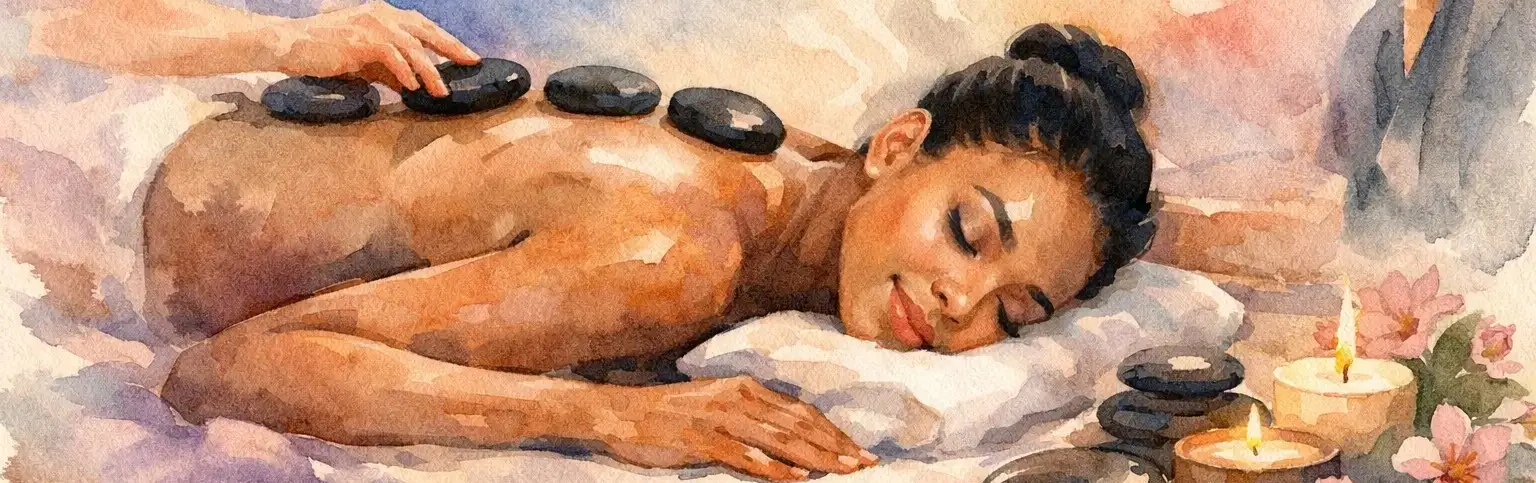
A warm stone resting between your shoulders can feel like permission to stop bracing. For people carrying deadlines, emotional labor, restless sleep, or the quiet weight of burnout, what is hot stone massage therapy is more than a technical question. It is often a question about whether there is a gentler way to feel cared for in your body.
Hot stone massage therapy combines traditional massage techniques with smooth, heated stones, usually made of basalt. Basalt is a volcanic rock that holds heat well, allowing your massage therapist to use steady warmth alongside intentional touch. The experience is designed to help the body soften gradually, rather than asking tense muscles to release all at once.
At its heart, this is a restorative form of bodywork. It can offer a quiet oasis from constant doing and create space to notice what your body has been holding.
What Is Hot Stone Massage Therapy, Exactly?
During a hot stone massage, a therapist warms stones in temperature-controlled water and checks that they are comfortable before they touch your skin. Some stones may be placed in still, supportive positions, such as along the back, in the hands, or near the feet. Others are lightly glided over the body with massage oil.
The therapist may also use their hands for classic massage strokes, adjusting pressure and pace to your comfort. The stones are not meant to feel intensely hot or challenging. They should feel deeply warm, soothing, and easy to receive. You are always welcome to ask for less heat, lighter pressure, more quiet, or a change in positioning.
That choice matters. A supportive massage is not something to endure. It is an opportunity to practice listening to your own needs in a setting where those needs are respected.
Why Warmth Can Feel So Restorative
Heat can encourage muscles to relax, which may make it easier for a therapist to work with areas of everyday tightness. When the body is less guarded, massage can often feel more flowing and less intense than firm pressure alone.
For many people, the more meaningful effect is nervous system support. Warmth, a calm environment, and slow, predictable touch can signal safety to a system that has been running on alert. You may notice your breathing deepen, your jaw unclench, or your thoughts become less urgent. Those shifts are not a promise that stress disappears after one session. They are moments of regulation that can remind your body what settling feels like.
Hot stone massage is not a cure for anxiety, chronic pain, trauma, or a medical condition. Still, it can be a valuable part of a broader care plan for people seeking rest, body awareness, and a more sustainable relationship with stress.
What a Session Usually Feels Like
A session typically begins with a brief conversation. Your therapist may ask what brought you in, where you feel tension, how much pressure you prefer, and whether there are any health concerns to consider. You do not need to have the perfect words. “I feel overwhelmed,” “my shoulders are always up,” or “I want to feel grounded” is useful information.
Once you are comfortable on the massage table, the session unfolds at an unhurried pace. The contrast can be striking: cool air in the room, a warm stone at the base of the spine, the steady rhythm of a therapist’s hands. Because the heat reaches the body gradually, some clients find that they can receive deeper work without the sharpness they associate with a more vigorous massage.
Every experience is individual. One person may feel sleepy and heavy in the most comforting way. Another may feel emotionally tender or newly aware of places they have been disconnected from. There is no correct response. Your body may simply be relieved to have a place to breathe again.
Potential Benefits of Hot Stone Massage
People often choose hot stone massage because they want relief from muscular tension, especially in the neck, shoulders, back, hands, or legs. The warmth may support ease in tight areas and help the body feel more open after a long stretch of sitting, commuting, caregiving, or pushing through exhaustion.
It can also be a meaningful choice when ordinary relaxation feels out of reach. If your mind tends to race during a standard massage, the sensory experience of warm stones can give your attention something gentle to return to. That may make it easier to stay present rather than mentally sorting tomorrow’s to-do list.
The benefits can be practical as well as personal: a sense of calm, temporary relief from muscle soreness, improved awareness of where you carry stress, and a feeling of being more connected to yourself. Results vary with your body, stress level, health history, and the kind of care you need that day.
Is Hot Stone Massage Right for You?
Hot stone massage can be especially appealing if you crave comfort, tend to feel cold, have persistent muscle tightness, or want a slower and more enveloping massage experience. It may also be a welcoming entry point if you are new to bodywork and feel nervous about deep pressure.
But warmth is not right for every body or every season of life. Tell your therapist before booking or at the start of your session if you are pregnant, have diabetes or reduced sensation, take blood-thinning medication, have a circulation concern, have an active infection or inflammation, sunburn, open wounds, recent surgery, or a heat-sensitive condition. It is also wise to check with a qualified medical professional if you are managing a complex health condition.
A skilled therapist can help determine whether adjustments are appropriate or whether another modality may better support you. Sometimes a traditional massage, gentle Reiki session, acupuncture treatment, or breathwork practice may feel like the more aligned next step. Healing is not one-size-fits-all, and there is no prize for choosing the most intense option.
How to Prepare and Care for Yourself Afterward
You do not need to do much to prepare. Arrive a few minutes early if possible, wear whatever helps you feel at ease, and share your preferences honestly. Eating a light meal beforehand and drinking water can help you feel comfortable, though there is no need to force large amounts of water because you had a massage.
Afterward, give yourself a little breathing room if your schedule allows. Notice whether you want a quiet walk, a warm shower, a simple meal, or an earlier night. Some people feel energized; others feel deeply relaxed. Gentle movement and rest can help you stay connected to the care you just received.
If you notice soreness that feels unusual, lingering discomfort, dizziness, or a reaction that concerns you, contact your healthcare provider. Massage should leave you feeling supported, not pushed past your limits.
A Gentle Return to Your Body
Hot stone massage therapy is not about fixing everything in an hour. It is a chance to meet your body with warmth instead of demand, especially when life has asked you to keep going long past your capacity. In a supportive setting like Lucent Healing, that pause can become part of a larger path toward balance, clarity, and renewal.
You deserve care that makes room for your whole self. Let the question be less about whether you have “earned” rest and more about what might change when you allow yourself to receive it.
Disclaimer: This article is for informational purposes only and does not constitute medical advice. Please consult a qualified healthcare professional regarding any medical concerns. The wellness services offered at Lucent Healing are intended to support overall well-being and complement conventional healthcare.