
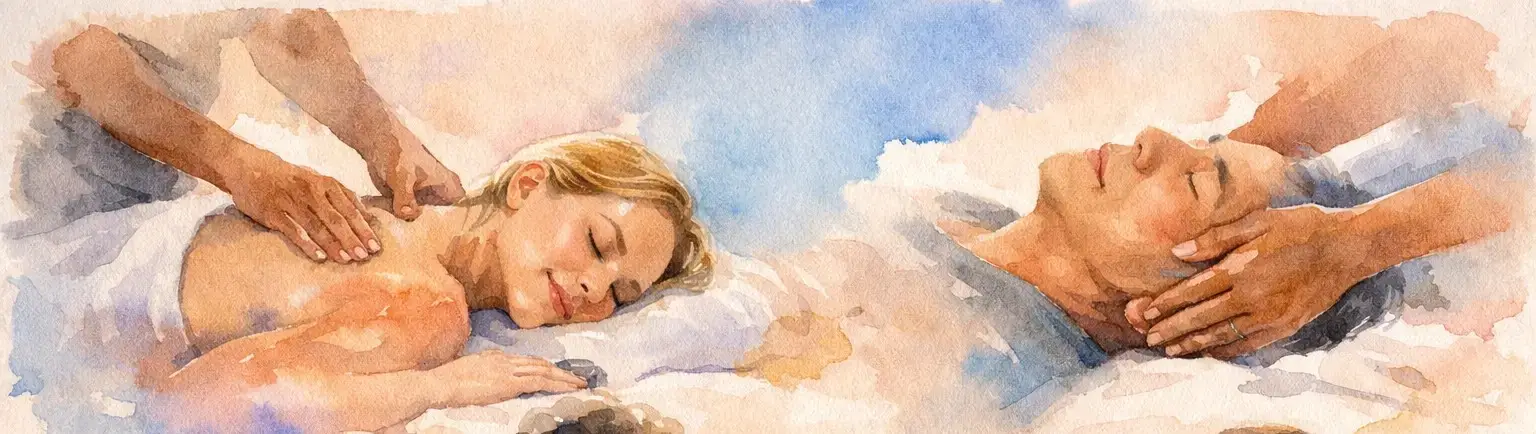
The person who notices everyone else’s needs first can go a long time without noticing their own. Massage therapy for caretakers creates a protected pause from the constant reaching, lifting, listening, coordinating, worrying, and holding it all together. It is not a reward you have to earn after you are completely depleted. It can be a place to breathe again before the strain becomes your baseline.
Caretaking may mean supporting a child, an aging parent, a partner, a friend, a client, a community, or all of the above. It can be deeply meaningful, and it can also ask a great deal of your body and nervous system. When your attention is repeatedly directed outward, rest can begin to feel unfamiliar or even uncomfortable. A supportive massage offers time to be cared for with no need to explain, perform, or solve anything.
Why caretaking lives in the body
Caretaking is often discussed as an emotional responsibility, but it has a physical cost, too. Hours spent at a bedside, behind the wheel, at a desk arranging appointments, or helping someone move safely can leave the shoulders braced and the jaw tight. Interrupted sleep may make ordinary aches feel louder. Stress can show up as headaches, shallow breathing, a tender low back, digestive discomfort, or the sense that your body is always preparing for the next emergency.
Even when there is no single crisis, the ongoing vigilance of care can be exhausting. You may be anticipating someone’s mood, watching for changes in their health, managing logistics, or carrying private fears that have nowhere else to go. The nervous system can learn to stay on alert long after the moment requires it.
Massage cannot change every demand placed on a caretaker. It cannot create more hours in the day or replace practical help, therapy, medical care, respite services, and community support. What it can offer is a gentle interruption. Through steady touch, a quieter environment, and time set aside just for you, the body has an opportunity to soften out of its habitual guard.
Massage therapy for caretakers is not one-size-fits-all
The most restorative massage is not necessarily the deepest or longest one. For a person who is already overwhelmed, intense pressure or a highly stimulating experience may feel like one more thing to endure. Care should meet your capacity that day.
A trauma-informed, client-centered session begins with choice. You can share where you are sore, what kind of touch feels supportive, and what you do not want. You can ask for lighter or firmer pressure, request more quiet, keep certain areas off limits, change position, take a pause, or end early. You do not need a dramatic reason for any preference. Your comfort is enough.
For some caretakers, a calming full-body massage with slow, grounding work may feel most nourishing. For others, focused attention to the neck, hands, feet, hips, or low back may be more useful. If you are carrying grief, emotional fatigue, or a lot of sensory overload, a quieter session with simple, predictable touch can feel especially supportive.
If you have a new injury, fever, unexplained swelling, a blood-clotting concern, are in active medical treatment, or have another significant health condition, let your practitioner know before the session. There may be ways to adapt the massage, or it may be better to speak with a medical provider first. Thoughtful care includes knowing when gentleness, modification, or another kind of support is needed.
What rest can feel like after a session
People often expect massage to make pain disappear immediately. Sometimes it does bring noticeable physical relief, especially when tension has been building in familiar places. But the subtler shifts can matter just as much.
You may notice that your breath reaches lower into your body. Your shoulders may stop hovering near your ears. You may feel less reactive to small demands, more aware of hunger or thirst, or more able to sleep. Some people feel tender or emotional afterward, particularly if they have been holding themselves together for a long time. That response is not a failure to relax. It can simply be part of making room for what has not had space to be felt.
The effects also depend on what happens around the appointment. A single massage may offer welcome relief, while regular sessions can become a steady ritual of checking in with your body. Neither approach is morally better. Frequency should reflect your schedule, budget, physical needs, and access to other support. Care that adds financial stress or scheduling pressure is not truly restorative.
Making room for care without more guilt
Guilt is one of the most common barriers to rest for caretakers. You may think, “I should save this money,” “Someone else needs me,” or “I do not have time.” Those concerns can be real. And still, your wellbeing is not separate from the care you give.
When your body is chronically depleted, everything takes more effort. A small moment of replenishment can support clearer boundaries, steadier energy, and more patience with yourself. This is not about becoming endlessly productive after a massage. It is about remembering that you are a whole person, not only the role you fill for others.
Try treating an appointment as part of the care plan rather than an escape from it. If a full massage feels difficult to schedule, begin with what is possible. A shorter session, a monthly appointment, or a visit timed after a demanding week may offer a realistic starting point. Protect a little buffer afterward when you can, rather than rushing immediately into an obligation. Drink water, eat something nourishing, take a short walk, or sit somewhere quiet before returning to your day.
It can also help to tell the people around you in simple language: “I have an appointment for my wellbeing.” You do not have to defend the decision with a list of symptoms. Letting others see you make room for care can be a gentle reminder that rest belongs in a life of service, too.
Choosing a massage space where you can exhale
For caretakers, the setting matters. You may be used to entering rooms where you must assess what needs to be done. A wellness space should feel different: clear, welcoming, and respectful of your autonomy.
Look for a practitioner who invites communication without making you carry the whole conversation. They should explain what to expect, listen to your goals, and check in about pressure and comfort. They should also respect your boundaries the first time you state them. You never need to tolerate touch, conversation, scents, music, or room temperature that does not feel right for you.
At Lucent Healing in Bushwick, Brooklyn, massage can be part of a more personal path toward renewal. Some people feel supported by bodywork on its own; others may want to pair it over time with breathwork, private yoga, Reiki, acupuncture, or another gentle modality. There is no requirement to do more. The intention is simply to create care that honors your mind, body, and spirit together.
Let receiving be part of the practice
Caretakers are often skilled at anticipating what others need. Receiving can take practice. You may notice the urge to apologize for being tired, to minimize discomfort, or to use the massage table as a place to mentally organize tomorrow. If that happens, meet it kindly. There is nothing wrong with a busy mind.
You can return to one simple permission: for this hour, you do not have to hold everything. Let the table support your weight. Let your breath be ordinary. Let care reach you in the same human way you so often offer it to someone else.
You deserve more than surviving your responsibilities. You deserve moments that help you come home to yourself, one quiet breath and one supported body at a time.
Disclaimer: This article is for informational purposes only and does not constitute medical advice. Please consult a qualified healthcare professional regarding any medical concerns. The wellness services offered at Lucent Healing are intended to support overall well-being and complement conventional healthcare.