
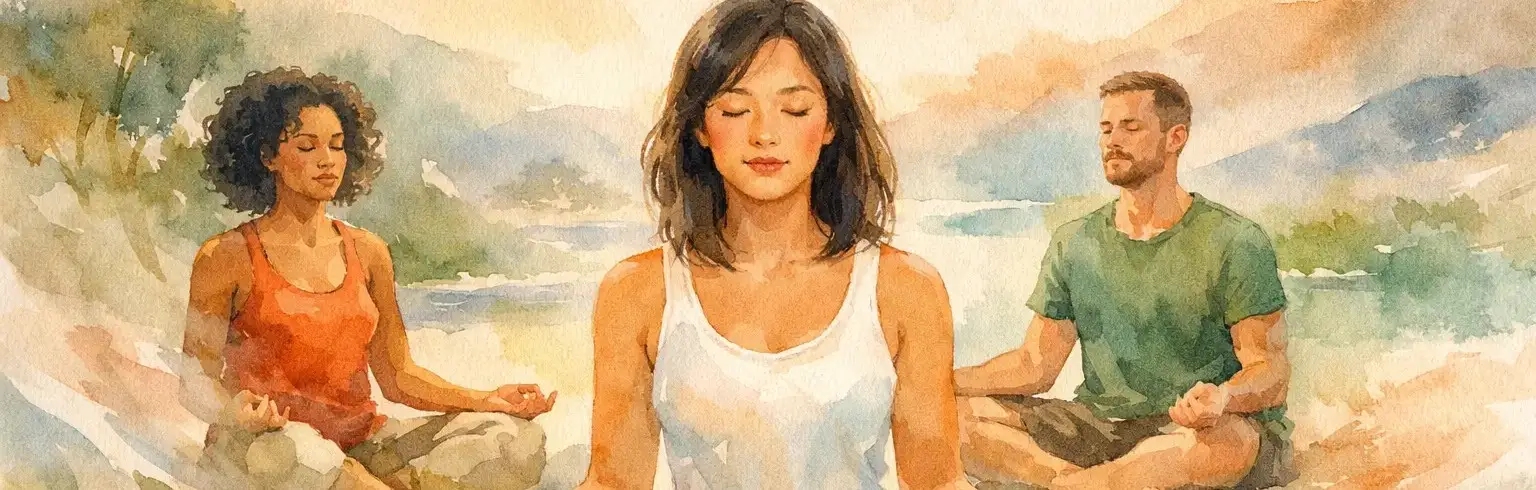
Your jaw is clenched during a meeting. Your shoulders creep toward your ears on the train home. By bedtime, you may feel exhausted but strangely unable to settle. This is a familiar pattern for many people living with stress overload. Learning how to release body tension is not about forcing your body to relax on command. It is about offering it enough safety, time, and support to soften.
Tension is often the body’s intelligent attempt to protect you. It can build after long hours at a desk, a difficult conversation, poor sleep, chronic pain, grief, or simply too many demands without enough room to recover. You do not need to blame yourself for holding it. You can meet it with curiosity and small practices that help you come home to yourself.
Start by noticing where tension lives
Before trying to change anything, take a quiet inventory. Sit or stand in a position that feels supported and let your attention move slowly from your forehead to your feet. Notice your brow, jaw, throat, shoulders, chest, belly, hands, hips, and legs. You are not looking for a perfectly relaxed body. You are simply listening.
Try naming what you feel in uncomplicated words: tight, heavy, braced, buzzing, numb, achy, warm, or restless. This kind of noticing can interrupt the habit of pushing through discomfort until it becomes overwhelming. If closing your eyes does not feel comfortable, keep them open and orient yourself to the room around you.
Body tension is not always loud. Sometimes it appears as shallow breathing, an urge to stay busy, headaches, stomach discomfort, or the sense that you cannot fully rest even when you finally have time. These signals deserve gentleness, not judgment.
How to release body tension through your breath
Breathing practices are most helpful when they feel accessible rather than restrictive. You do not have to take huge breaths or hold your breath for long counts. In fact, trying too hard can create more strain for some people.
Begin by letting your exhale be a little longer than your inhale. You might breathe in softly through your nose for three counts, then breathe out for four or five. Repeat for a minute or two, allowing your shoulders and belly to move naturally. A relaxed sigh can also help: inhale comfortably, then let the air leave with an audible exhale.
Longer, unforced exhales can signal to the nervous system that the immediate moment may be safe enough to downshift. The goal is not to erase every thought or sensation. It is to create a little more space inside your experience.
If breath-focused practices make you feel lightheaded, anxious, or more activated, return to normal breathing and choose another grounding tool. Looking around the room, feeling both feet on the floor, or holding a warm mug can be just as supportive.
Invite movement instead of stretching through pain
When you feel tight, it can be tempting to push hard into a stretch. But tension often responds better to slow, respectful movement than to intensity. Your body may need permission to move, not another demand placed on it.
Start with a few shoulder rolls, then gently reach your arms overhead and let them lower. Slowly turn your head side to side without forcing the range. Shift your weight from one foot to the other. If you have been sitting for a long time, take a brief walk and allow your arms to swing naturally.
Private yoga can offer a more individualized way to explore this process, especially if you are unsure what movements feel supportive. The right practice is not the deepest pose. It is the one that leaves you feeling more connected, steady, and at ease afterward.
Pay attention to the difference between sensation and pain. A mild stretch, warmth, or temporary trembling may be part of release. Sharp pain, tingling, dizziness, or worsening symptoms are signs to stop and seek appropriate medical guidance.
Give your muscles a clear signal to soften
Sometimes the body needs contrast in order to recognize that it can let go. Progressive muscle relaxation is a simple practice that uses brief, gentle contraction followed by release.
Begin with your hands. Make a light fist for three seconds, then open your fingers slowly and notice the difference. You can continue with your shoulders by lifting them toward your ears, holding gently, and letting them drop. Move through the body in small areas rather than attempting to tense everything at once.
Keep the effort low. This is not a workout, and it should never hurt. For people who feel disconnected from their bodies, this practice can be especially useful because it offers a clear, contained way to notice sensation without needing to analyze it.
Use warmth, pressure, and rest as forms of care
Your nervous system receives information through your senses. A warm shower, heating pad, weighted blanket, soft clothing, or self-massage with lotion can all communicate comfort. These are not frivolous extras. They are practical ways to make rest more available.
Try placing one hand over your chest and the other over your belly or upper arm. Feel the warmth and steady pressure of your own hands for several breaths. You might say quietly, “I am here,” or “I do not have to solve everything right now.” Choose words that feel believable. The purpose is not forced positivity, but reassurance.
A consistent wind-down ritual can help, too. Ten minutes of low light, less screen stimulation, a warm drink, or calming music may not fix the source of your stress, but it can help your body recognize the difference between work time and restoration time.
Consider support when tension keeps returning
At-home practices can be meaningful, yet persistent tension sometimes needs more dedicated care. Massage therapy may help address muscular holding patterns while giving you space to rest and receive. Acupuncture and cupping can be supportive options for people seeking a whole-body approach to discomfort and stress. Reiki, sound healing, and breathwork may offer another path for those who feel emotionally overloaded or spiritually disconnected.
There is no single best modality for everyone. It depends on what you are carrying, what feels safe in your body, and whether you want touch-based care, energy work, guided movement, or a combination. A trauma-informed practitioner should welcome your preferences, explain what to expect, and honor your boundaries throughout the session.
At Lucent Healing in Bushwick, Brooklyn, care is approached as a personal healing path rather than a one-size-fits-all appointment. You are allowed to begin slowly, ask questions, and choose the support that feels right for you.
Look beyond the tight muscles
If you release tension in your shoulders only to feel it return by the next morning, that does not mean you have failed. It may mean your body is responding to an ongoing workload, a lack of sleep, unresolved stress, limited movement, or a schedule with no true pauses. Relief can be both physical and practical.
Consider where you can make one small change that protects your capacity. It might be setting a reminder to stand up between calls, eating before you become depleted, taking a five-minute transition after work, or asking for help before you reach your limit. Small, repeated acts of care often create more lasting change than a single dramatic reset.
If tension comes with severe or new pain, weakness, numbness, chest pain, trouble breathing, unexplained symptoms, or a recent injury, seek care from a qualified medical professional promptly. Holistic support can be a meaningful complement to medical care, but it should not replace evaluation when something feels urgent or concerning.
Your body does not need to earn rest by reaching a breaking point. Each soft breath, supported stretch, and moment of stillness is an invitation to become a place to breathe again.
Disclaimer: This article is for informational purposes only and does not constitute medical advice. Please consult a qualified healthcare professional regarding any medical concerns. The wellness services offered at Lucent Healing are intended to support overall well-being and complement conventional healthcare.