
When your shoulders feel like they are holding up your whole life, tension stops being a small annoyance. It starts shaping how you breathe, how you sleep, and how present you can be in your own body. Cupping therapy for tension can offer a different kind of relief – one that does not ask your body to push harder, but invites it to soften.
For many people, tension is not just physical. It builds slowly through long workdays, emotional stress, poor sleep, overstimulation, and the quiet habit of bracing against life. You may feel it in your neck and upper back, in a clenched jaw, in tension headaches, or in that constant sense that your body never fully lets go. When that pattern becomes familiar, deeper support can make all the difference.
Why tension can feel so hard to release
Tension often has a layered quality. There is the obvious muscle tightness, but there can also be nervous system overload underneath it. If your body has been running on stress for weeks or months, it may begin to treat holding on as normal.
That is why stretching alone does not always solve it. Massage can help, hydration matters, and rest matters too, but sometimes the body needs a stronger signal that it is safe to release. Cupping can be part of that signal. It works differently from hands-on pressure, which is part of why so many people find it helpful when areas feel dense, stuck, or resistant.
How cupping therapy for tension works
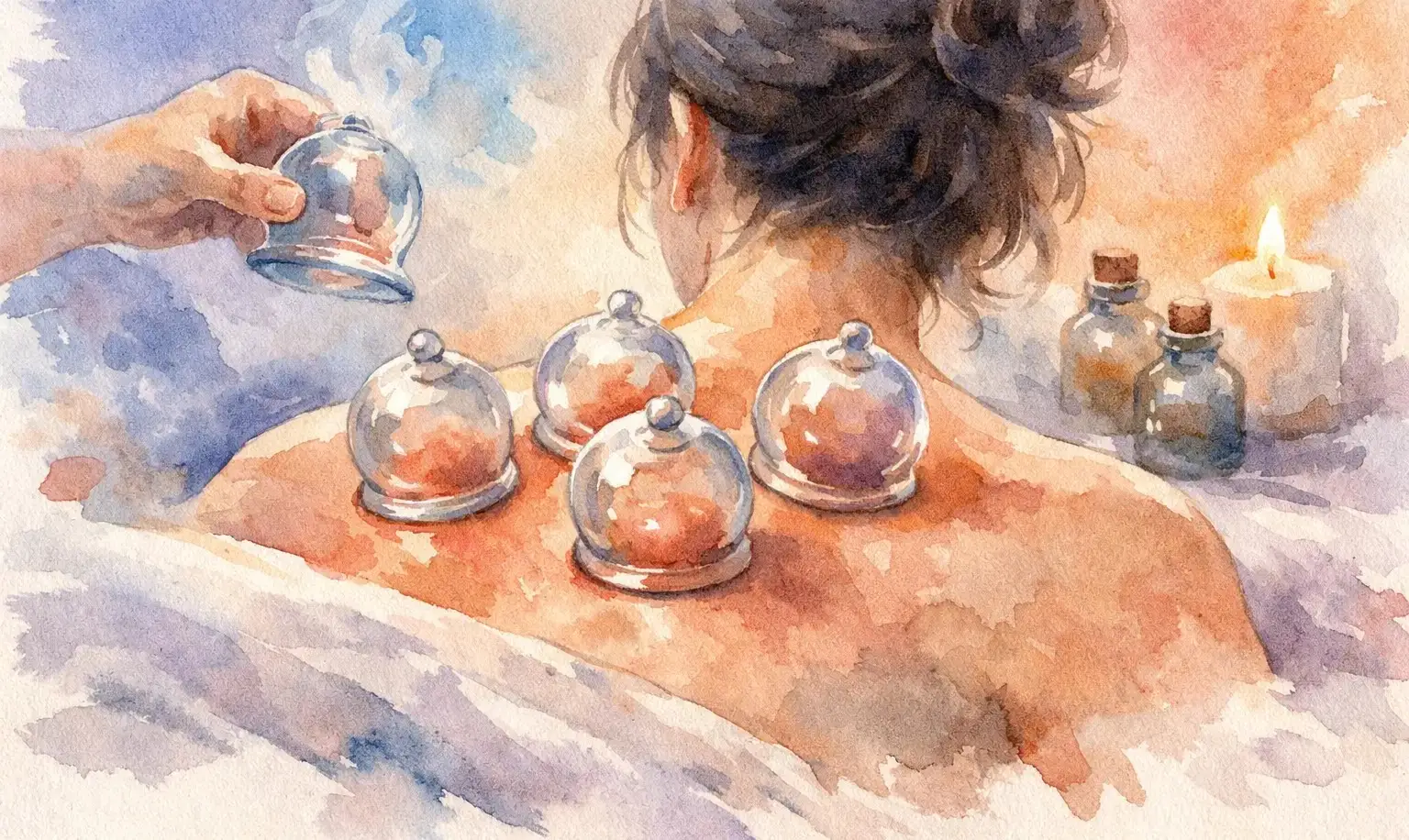
Cupping uses suction rather than compression. Small cups are placed on the skin to gently lift the tissue underneath. This can create space in areas that feel tight and congested, while encouraging circulation and helping the body shift out of guarded holding patterns.
For clients dealing with upper back tightness, shoulder tension, or stress-related muscle discomfort, this lifting effect can feel surprisingly relieving. Instead of pressing down into already tender tissue, cupping draws upward. That change in direction can be especially supportive when the body feels overworked or inflamed by stress.
The experience depends on the style used. Some sessions involve stationary cups that rest on specific points for a short time. Others use gliding cups, where the practitioner moves the cups across oiled skin to create a broader release. Neither approach has to feel intense to be effective. In a gentle, client-centered setting, the goal is not to overwhelm the body. It is to help it unwind.
What cupping therapy for tension may help with
Tension does not look the same for everyone, and that matters. For one person, it shows up as chronic tightness between the shoulder blades. For another, it is a stiff neck after long hours at a desk. For someone else, it is the physical weight of anxiety living in the chest, traps, and jaw.
Cupping may support relief for muscular tightness, stress-related body aches, restricted movement, and areas that feel chronically bound up. Some people also notice that once their body softens, their breathing deepens, and their mind feels quieter. That does not mean cupping is a cure-all. It means physical release and emotional relief often travel together.
This is especially true when tension has become part of a larger burnout pattern. If your system rarely gets to rest, even small moments of release can feel profound. A well-held session can create that feeling of finally having a place to breathe again.
What a session feels like
If you are new to cupping, it helps to know that the sensation is distinct but usually very manageable. You may feel a gentle pulling, a sense of pressure, warmth, or a spreading release through the area being treated. In places with more stagnation or tightness, the sensation can feel stronger at first, but it should still feel tolerable and supported.
Many people are surprised by how calming it can be. Once the initial unfamiliarity passes, the body often settles. It is not unusual to leave feeling lighter, looser, and more grounded than when you arrived.
One thing that often comes up is cup marks. These circular marks can appear after treatment and may range from light pink to deeper shades depending on your body and the area treated. They are temporary and usually fade over several days. They are not necessarily a sign of pain or injury. They are simply part of how the body responds to suction.
Is cupping always the right choice?
Not always, and that is part of good care. Cupping can be deeply supportive, but it is not the best fit for every person or every moment. If you are highly sensitive to touch, dealing with certain skin conditions, prone to bruising, pregnant, or managing a medical concern, your practitioner should adjust the session or help determine whether another modality would be better.
It also depends on what kind of tension you are carrying. If your body feels depleted, exhausted, and easily overstimulated, a gentler approach may be best. That could mean lighter suction, shorter cup placement, or combining cupping with other calming modalities rather than making it the whole focus.
This is where personalized care matters. Healing is rarely one-size-fits-all. The most supportive session is the one that meets your system where it is.
Cupping and the nervous system
One reason people seek cupping is not just to get rid of a knot in the shoulder. They want to feel different in their whole body. They want the constant hum of stress to quiet down.
That is where cupping can offer more than mechanical muscle relief. When tension begins to release, the nervous system often responds as well. Your breath may deepen. Your jaw may unclench without effort. You may notice a feeling of heaviness in the table and a softness in your thoughts that has been hard to reach on your own.
For people who live in a near-constant state of doing, this matters. Relief is not only about less pain. It is also about reconnecting with a sense of safety, spaciousness, and rest. At Lucent Healing, that whole-person perspective is central. The body is never treated as separate from the stress, emotions, and life experiences it carries.
How to get the most from treatment
Cupping tends to work best when you listen to what your body needs before and after the session. Arriving hydrated and not rushing in with your stress level at a ten can help. So can giving yourself a little space afterward, rather than stacking the rest of the day with meetings and errands.
After a session, some people feel energized, while others feel deeply relaxed or even a little sleepy. Both can be normal. Drinking water, resting if needed, and allowing the body time to integrate the work can make the experience more supportive.
It is also worth remembering that longstanding tension may not disappear in one visit. Sometimes there is immediate relief. Sometimes the body responds in layers. A tight upper back that has been bracing for years may need consistent care, along with attention to posture, stress habits, breath, and recovery. The good news is that healing does not have to be forceful to be meaningful.
When gentle support changes everything
There is a common belief that strong tension requires aggressive treatment. But many overstressed bodies do not need more intensity. They need care that is skillful, attuned, and kind. Cupping can be powerful without being harsh.
If you have been carrying stress in your shoulders, neck, and back for so long that it feels like part of your personality, relief may start with something simple – a moment of being supported enough to let go. Sometimes that is what the body has been waiting for all along.
You do not have to earn rest by reaching a breaking point. You can choose care sooner, while your body is still asking gently. And if cupping helps you exhale a little more fully, move a little more freely, or come home to yourself again, that is not a small thing. It is a beginning.
Disclaimer: This article is for informational purposes only and does not constitute medical advice. Please consult a qualified healthcare professional regarding any medical concerns. The wellness services offered at Lucent Healing are intended to support overall well-being and complement conventional healthcare.