
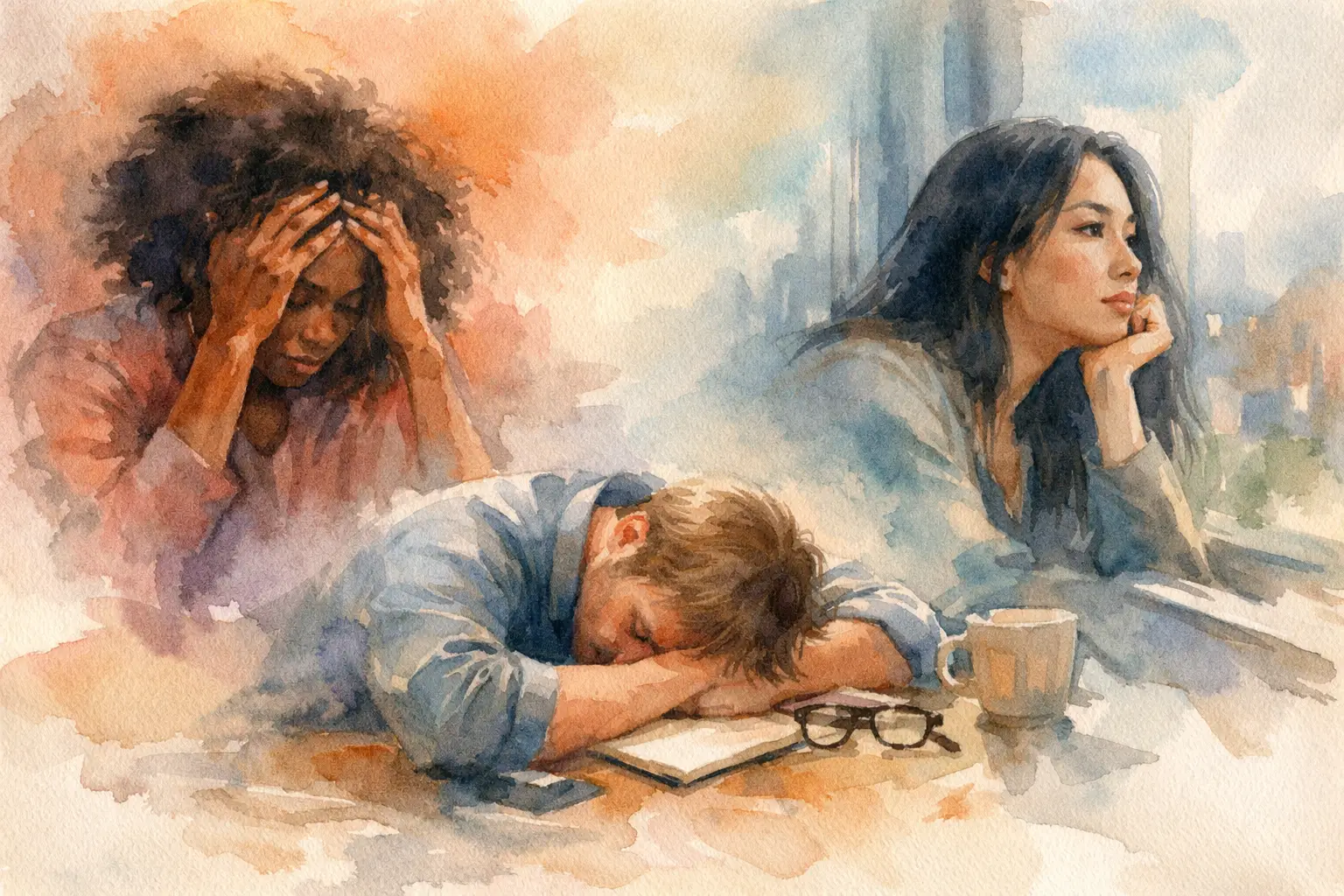
You used to push through hard weeks and bounce back after a weekend. Now the tiredness lingers, your patience is thinner than usual, and even small tasks can feel strangely heavy. Burnout symptoms often arrive this way – not all at once, but as a steady dimming of energy, clarity, and connection to yourself.
Burnout is more than being busy or needing a vacation. It can affect your nervous system, your emotions, your sleep, your relationships, and your sense of meaning. For many people, it also brings a quiet kind of disconnection. You may still be functioning, still showing up, still checking the boxes, while feeling like your body and spirit are asking for a kind of care that rest alone has not restored.
What burnout symptoms can look like
Some signs are easy to recognize. Deep fatigue, trouble concentrating, irritability, and feeling emotionally drained are common. But burnout can also be subtle. You might notice that your body feels tense all the time, your sleep is light or uneven, or your motivation has flattened into numbness.
For some people, burnout feels wired and restless. For others, it feels collapsed and shut down. Both can come from prolonged stress. One person may lie awake with a racing mind and a tight chest. Another may sleep for hours and still wake up exhausted. This is part of why burnout can be confusing – it does not look exactly the same in every nervous system.
Physical symptoms can include headaches, muscle tension, digestive changes, jaw clenching, shallow breathing, and a feeling that your body never fully relaxes. Emotional symptoms may show up as increased anxiety, sadness, resentment, overwhelm, or a lack of joy in things that once felt nourishing. Mentally, burnout can bring brain fog, forgetfulness, indecision, and a reduced ability to handle normal demands.
There is also a relational side to burnout that often gets overlooked. You may withdraw from people you love because interaction feels like one more thing to manage. Or you may feel unusually reactive, sensitive, or impatient. Sometimes the clearest sign is this: you no longer feel like yourself, and you cannot remember when that change began.
Why burnout symptoms are easy to dismiss
Many adults are praised for overriding their limits. Being dependable, productive, and available often gets rewarded long before the cost becomes visible. That can make burnout feel like a personal failure instead of a predictable response to chronic stress.
It is also common to minimize what you are feeling because someone else seems to have it harder, or because you are still technically functioning. But functioning is not the same as feeling well. If getting through the day requires constant effort, if your body never seems to settle, or if rest does not feel restorative, those signals matter.
Burnout can be especially easy to miss when your stress has been going on for a long time. What once felt alarming starts to feel normal. The tight shoulders, the afternoon crash, the Sunday dread, the inability to be fully present – these patterns can become so familiar that they stop standing out. That does not make them harmless.
The difference between stress and burnout
Stress and burnout are related, but they are not identical. Stress often feels like too much – too much to do, too much pressure, too much urgency. Burnout tends to feel like not enough – not enough energy, not enough care, not enough internal resources to keep meeting the moment.
With stress, you may still believe that if you can just finish the project, fix the problem, or get through the week, relief will come. With burnout, that hope often fades. There can be a sense of depletion that touches everything, even the parts of life that used to help you recover.
That said, the line is not always neat. Some people move between stress and burnout in cycles. Others have burnout layered with anxiety, grief, chronic pain, hormonal shifts, or trauma history. This is why gentle self-inquiry matters more than forcing yourself into a label. The goal is not to diagnose yourself perfectly. The goal is to notice what your system is asking for.
When burnout lives in the body
Burnout is often talked about as a mental or emotional issue, but the body keeps the score of prolonged overdrive. When your nervous system has been bracing for too long, it may stop feeling safe to soften. You can want rest and still be unable to drop into it.
This can look like exhaustion paired with agitation. You lie down, but your thoughts keep moving. You finally have time off, but instead of relief, you feel flat, anxious, or strangely unsettled. That does not mean you are doing rest wrong. It may mean your system needs support in remembering how to come out of survival mode.
This is where holistic care can be deeply supportive. Practices that work with the body, breath, and energy can help create conditions for regulation rather than asking you to think your way out of depletion. Massage therapy may help soften chronic holding patterns. Acupuncture can support balance and relaxation. Breathwork, gentle yoga, Reiki, sound healing, and hypnotherapy may offer different entry points back into presence, depending on what feels safe and accessible for you.
There is no single best modality for every person. Some people need grounding touch. Some need quiet stillness. Some need movement before they can settle. Healing is personal, and it often works best when it honors the whole person rather than treating fatigue as a problem to push past.
Signs it may be time to reach out for support
If burnout symptoms are affecting your sleep, mood, relationships, work, or ability to care for yourself, it is worth paying attention. The same is true if you keep promising yourself things will calm down soon, but they never do.
Support does not have to begin at a breaking point. In fact, it is often more effective when you seek care before your system fully crashes. Reaching out can look different for different people. It might mean talking with a therapist, meeting with a medical provider to rule out underlying concerns, or making space for restorative care that helps your body feel safe enough to exhale.
If your symptoms include hopelessness, panic, severe depression, or a sense that you may harm yourself, immediate mental health support is essential. Burnout can overlap with serious conditions, and compassionate care includes knowing when a higher level of support is needed.
How to respond with more care and less force
When you are burned out, your first instinct may be to fix yourself with stricter routines, more discipline, or a better morning schedule. Structure can help, but burnout rarely heals through pressure. Most often, it responds to honesty, support, and sustainable changes.
Start by noticing what is consistently draining you and what genuinely replenishes you. Not what looks good on paper, but what helps you feel more present, more grounded, and less defended in your body. That answer may be more sleep, fewer obligations, regular meals, screen boundaries, quieter evenings, or asking for help you have been postponing.
It can also help to lower the threshold for rest. Many people wait until they are completely depleted before giving themselves permission to pause. Small moments of recovery matter. A few unhurried breaths between meetings, a bodywork session, a walk without your phone, ten minutes lying down in silence – these are not insignificant. They teach your system that relief is possible.
If you are craving a place to breathe again, a healing space like Lucent Healing in Bushwick can offer more than a temporary break. It can become part of a larger practice of remembering that your well-being deserves steady attention, not just emergency care.
Burnout symptoms are not a character flaw
One of the tenderest truths about burnout is that it often happens to caring, capable people. People who show up. People who keep going. People who have learned, for many reasons, to stay responsive to everyone else while drifting further from their own needs.
There is nothing weak about reaching your limit. There is wisdom in noticing that your body is asking for a different pace, a deeper exhale, a more supported way of living. Burnout symptoms are not proof that you have failed. They may be a sign that something in you is ready to be listened to with more compassion than urgency.
If that is where you are, let this be your reminder that healing does not have to start with a dramatic overhaul. Sometimes it starts with one honest moment, one softened expectation, one choice to treat yourself like someone worth caring for.
Disclaimer: This article is for informational purposes only and does not constitute medical advice. Please consult a qualified healthcare professional regarding any medical concerns. The wellness services offered at Lucent Healing are intended to support overall well-being and complement conventional healthcare.