
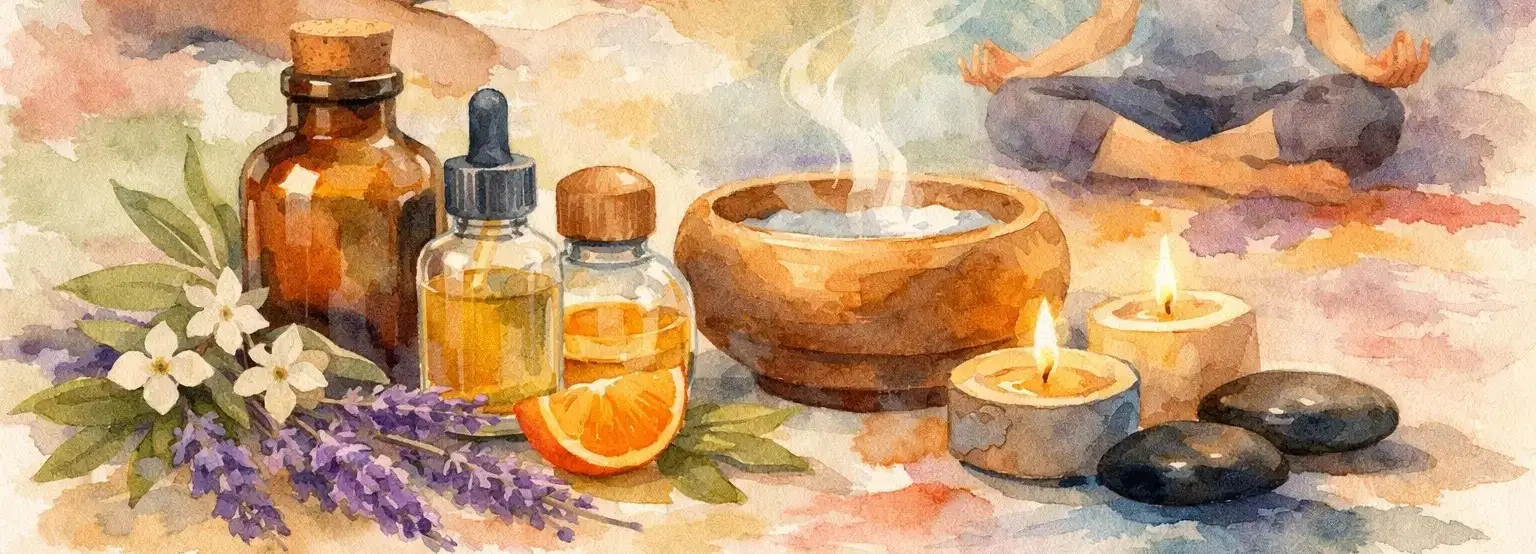
Some days, the nervous system does not need another task on the list. It needs a small, reliable signal that the pace can soften: warm water, a quieter room, a slower exhale, or a familiar scent. If you have been wondering which essential oils are good for relaxation, the most helpful answer is not one perfect oil. It is finding an aroma that feels comforting and using it in a way that supports your body rather than asking it to perform.
Essential oils are concentrated plant extracts used for their scent and, in some settings, as part of massage, bathing, meditation, or other grounding rituals. They cannot solve burnout, erase chronic stress, or replace medical or mental health care. But scent has a direct relationship with memory and emotion, and a gentle aroma can become a meaningful cue for rest. Over time, your evening diffuser or massage oil may tell your system, “You are safe enough to pause now.”
Which essential oils are good for relaxation?
The oils below are among the most commonly chosen for a calmer atmosphere. Personal response matters. One person may find lavender deeply soothing, while another may connect more with the bright, soft warmth of bergamot. Let your own body have a voice in the choice.
Lavender for familiar, gentle calm
Lavender is often the first oil people reach for when they want to settle down, and for good reason. Its floral-herbal aroma is gentle, recognizable, and widely associated with winding down before sleep. It can be especially lovely when the mind is busy but the body is tired.
Try diffusing lavender while you change into comfortable clothes, stretch gently, or take a few unhurried breaths. A properly diluted lavender blend can also be used in a self-massage ritual on the shoulders, hands, or feet. The goal is not to force sleep or relaxation. It is to offer a consistent invitation to it.
Bergamot for tension with a touch of heaviness
Bergamot has a citrus scent with a softer, slightly floral edge. Many people find it uplifting without feeling overly energizing, which can make it a supportive choice when stress has left you emotionally flat, irritable, or weighed down.
This is a beautiful daytime or early-evening oil, particularly when you need to transition out of work mode without losing the rest of your day. Diffuse it during a quiet meal, journaling practice, or a few minutes of breathwork. If using bergamot on skin, choose a bergapten-free or “FCF” version, or keep the area out of sunlight, as some bergamot oils can increase sun sensitivity.
Roman chamomile for a softer landing
Roman chamomile has an apple-like, herbaceous scent that feels tender and grounding. It is often chosen for moments when you feel emotionally overstimulated, frazzled, or unable to stop bracing for the next demand.
Its aroma is not as classically floral as lavender, so it can be a welcome alternative for people who want something more earthy and quiet. Consider blending Roman chamomile with lavender in a diffuser before bed, or add a diluted blend to a warm foot soak. The ritual itself matters as much as the scent: let it be a few minutes where nothing is required of you.
Cedarwood for feeling grounded in your body
Cedarwood offers a warm, woody aroma that can make a room feel more anchored and settled. It may resonate with those who feel scattered, disconnected from their bodies, or mentally pulled in too many directions. Where bright citrus oils can feel expansive, cedarwood has a more rooted quality.
Use cedarwood in an evening diffuser blend with lavender or frankincense, especially when you are creating a quieter environment for reading, restorative yoga, or meditation. A woodsy aroma is not for everyone, but for some people it brings the sensation of being held by something steady.
Frankincense for stillness and reflection
Frankincense has a resinous, softly spicy scent often used in contemplative practices. It can pair well with meditation, prayer, sound healing, or breathwork because its aroma feels spacious without being sharp. For people carrying the mental noise of a full week, frankincense can help mark a transition into a more intentional pause.
Try it when you want to sit with yourself rather than distract yourself. A few drops in a diffuser during a slow body scan can create a calm, sanctuary-like atmosphere. If stillness feels difficult or uncomfortable, start small. Two minutes of supported breathing is enough to begin.
The best oil depends on what your stress feels like
Relaxation is not one single experience. Sometimes you need sleepiness. Sometimes you need grounding. Sometimes you need a gentle lift after a day that has taken more than it gave. Matching the scent to the moment can make your ritual feel more personal.
Lavender and Roman chamomile are often lovely for a bedtime routine or a tender nervous system. Bergamot may suit an afternoon reset when you want relief without feeling drowsy. Cedarwood can feel supportive when you are ungrounded, while frankincense may be a good companion for reflection and quiet practices.
You also do not have to love an oil for it to be popular. If an aroma brings up an unpleasant association, makes you feel nauseated, or simply does not feel good, set it aside. Your body’s response is useful information. A calming ritual should feel like a place to breathe again, not another wellness rule to get right.
Simple ways to use essential oils for relaxation
Diffusion is one of the easiest, lowest-contact ways to begin. Add the amount recommended by your diffuser manufacturer, then run it for a short period in a well-ventilated room. You do not need a strong scent filling every corner. Subtle is often more soothing.
For a more tactile practice, add essential oil to an unscented carrier oil, lotion, or bath product before it touches your skin. A common adult starting dilution is 1%, which is about six drops of essential oil per ounce of carrier oil. Use the blend for a hand massage, a gentle shoulder massage, or a few slow strokes along the feet. If you are new to topical use, patch test first.
A warm shower can become a simple aromatic reset, too. Place one or two drops on a shower steamer or on a washcloth positioned away from the direct stream of water, rather than applying undiluted oil to your body. Let the steam carry the scent while you take a few longer exhales.
You can also make scent part of a broader rest practice. Pair an oil with low lighting, calming music, a cup of tea, a brief guided meditation, or a few supported yoga shapes. At Lucent Healing, this whole-person approach matters because stress rarely lives in only one place. The mind, muscles, breath, and sense of connection all deserve care.
A few safety boundaries that protect the ritual
Natural does not automatically mean gentle for every person. Essential oils are highly concentrated, and more is not better. Keep these practices in mind:
- Do not ingest essential oils unless a qualified healthcare professional specifically guides you.
- Avoid applying undiluted oils directly to skin, and keep them away from eyes, inner ears, and other sensitive areas.
- If you are pregnant, nursing, managing a health condition, taking medications, or using oils with a child or pet in the home, consult an appropriately qualified clinician or veterinarian first.
- Stop using an oil if you notice headache, dizziness, coughing, skin irritation, or a sense of discomfort. Fresh air and a gentler approach are always available.
People with asthma, migraines, scent sensitivities, or trauma histories may find certain aromas activating rather than calming. In those cases, an unscented practice can be just as restorative. A weighted blanket, a warm compress, quiet bodywork, or a few minutes with your feet on the floor may offer more support than any diffuser.
Let scent become a cue for coming home to yourself
The most effective relaxation ritual is the one you can return to without pressure. You might choose lavender for the last ten minutes before bed, bergamot while you close your laptop, or cedarwood before a restorative stretch. Keep it small enough to be realistic and kind enough to feel nourishing.
When life has been loud, your system may need repetition before it trusts rest. Let a scent, a breath, and a moment of quiet become a gentle reminder: you do not have to earn your pause. You are allowed to come home to yourself, one soft ritual at a time.
Disclaimer: This article is for informational purposes only and does not constitute medical advice. Please consult a qualified healthcare professional regarding any medical concerns. The wellness services offered at Lucent Healing are intended to support overall well-being and complement conventional healthcare.