
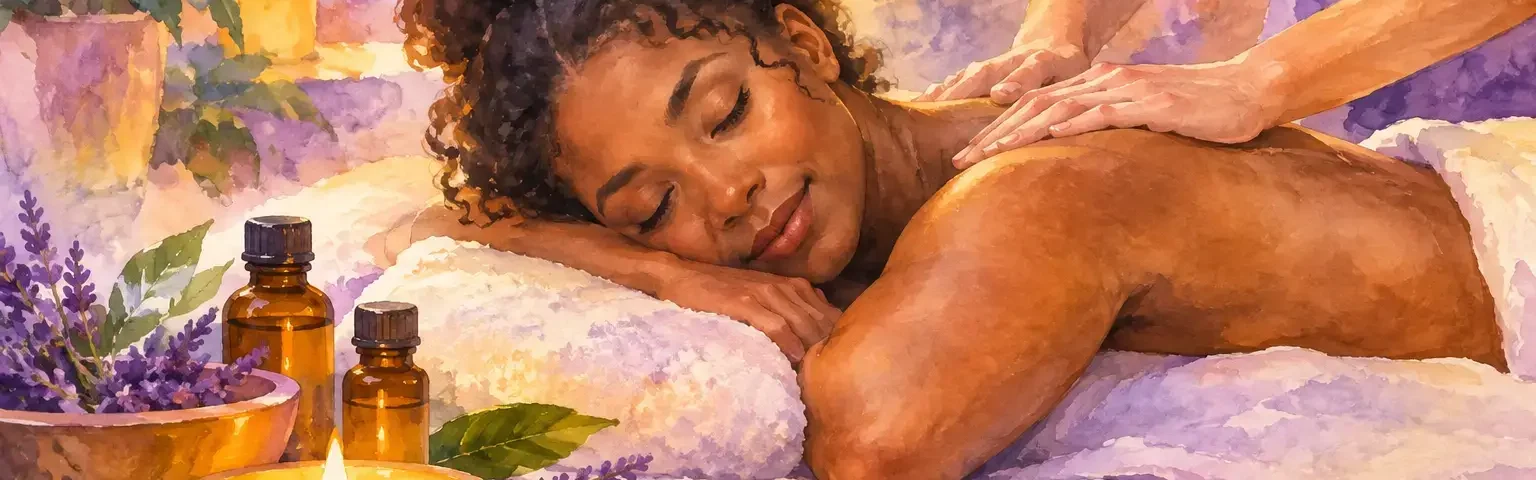
Some forms of rest ask very little of you: lie down, breathe, and let yourself be cared for. Aromatherapy and massage can offer that kind of pause, especially when stress has made your body feel tight, tired, or unfamiliar. The experience is not about forcing yourself to relax. It is an invitation to soften at your own pace.
For people carrying full calendars, emotional fatigue, caregiving demands, or the lingering effects of burnout, touch and scent can become gentle pathways back to the present moment. A thoughtfully paced session may help you notice where you have been bracing, where your breath has become shallow, and what it feels like to have nothing to manage for a while.
What Aromatherapy Adds to Massage
Massage uses intentional, therapeutic touch to address muscular tension and support relaxation. Aromatherapy incorporates the scent of plant-derived essential oils into that experience, often through a diffuser, a warm compress, or diluted oil used during bodywork. Together, they create a more sensory form of care.
Scent is closely connected to memory and emotion. A familiar fragrance may bring up comfort, while a grounding scent can help signal that it is safe to slow down. This does not mean every oil will feel calming to every person. Our bodies and associations are personal. The most supportive choice is the one that feels pleasant, tolerable, and aligned with what you need that day.
In a massage setting, aromatherapy is not meant to overpower the room or distract from the bodywork. It should feel like a quiet layer of support. You might notice the brightness of citrus, the floral softness of lavender, the earthiness of vetiver, or the clean, expansive quality of eucalyptus. The goal is not to create a dramatic effect. It is to help create an environment where your system can settle.
Aromatherapy and Massage for Stress Relief
When stress becomes chronic, the body can remain in a state of readiness long after the urgent moment has passed. Your shoulders may creep upward. Your jaw may stay clenched. Sleep may feel light or unrefreshing. Even stillness can feel uncomfortable when your nervous system has learned to expect the next demand.
Aromatherapy and massage offer a different kind of input: slower, steadier, and focused on comfort. The pressure of massage, the rhythm of the practitioner’s movements, the warmth of the table, and a scent you enjoy can all support a feeling of being held in the moment. Many people leave feeling less physically compressed and more aware of their breath.
That said, relaxation is not always immediate. If you have been running on adrenaline for a long time, receiving care can bring up emotion, restlessness, or a sudden awareness of how tired you are. None of these responses mean you are doing it wrong. A trauma-informed approach makes room for your real experience rather than treating relaxation as a performance.
Choosing Scents That Meet You Where You Are
There is no universal “best” essential oil for stress because the best choice depends on your body, preferences, sensitivities, and intentions. A scent that feels soothing to one person may be too strong, too sweet, or tied to an unpleasant memory for another.
Lavender is often chosen for its gentle, familiar character and may feel fitting when you want to unwind before rest. Bergamot and other citrus scents can feel lighter and more uplifting when emotional fatigue has left you feeling dull or weighed down. Peppermint or eucalyptus may feel clarifying, though their intensity is not right for everyone. Grounding oils such as cedarwood, frankincense, or vetiver may appeal when you feel scattered and want a more settled, rooted quality.
You do not need to know the names of oils or arrive with a perfect intention. You can simply say, “I feel overstimulated,” “I need comfort,” or “Strong scents give me headaches.” That is enough information to begin a collaborative conversation.
Your Comfort Is Part of the Treatment
The most restorative massage is one in which you have choice. Before the session begins, share anything that would help you feel more at ease: areas you would like addressed, areas you prefer to avoid, your pressure preference, whether you want quiet, and whether scents are welcome at all.
You can change your mind during the session. You can ask for less pressure, more warmth, a different position, an extra blanket, or no aromatherapy. You can also ask your practitioner to check in less often or more often. These are not interruptions. They are part of creating care that respects your body and your boundaries.
For some people, particularly those who feel disconnected from their bodies or have had difficult experiences with touch, a slower approach is more supportive than a deep-pressure massage. Gentle touch, clear consent, and the freedom to pause can help transform massage from another item on a wellness checklist into a place to breathe again.
When Aromatherapy May Not Be the Right Choice
Aromatherapy is optional, not required for a meaningful massage. It may be better to skip essential oils if you have scent-triggered migraines, asthma that is aggravated by fragrance, skin sensitivities, allergies, nausea, or a current aversion to smell. Pregnancy, certain medications, and health conditions can also affect which oils are appropriate.
Essential oils should be properly diluted before they touch the skin. More is not better. A skilled practitioner will use them thoughtfully and welcome your questions without making you feel difficult or overly cautious.
If you are managing a medical condition, receiving treatment, or have concerns about a specific oil, check with a qualified health professional as well as your massage practitioner. Aromatherapy can be a comforting complement to care, but it is not a replacement for medical evaluation or treatment.
Let the Benefits Continue After the Table
The transition after a massage matters. If possible, avoid rushing straight into a crowded train, a difficult meeting, or a long list of errands. Give yourself even ten quiet minutes to drink water, take a short walk, or sit without scrolling. Your body has just received a different message than it usually gets: there is time to pause.
You may notice that you sleep more deeply, feel emotionally tender, or become aware of tension that had faded into the background. These shifts can be useful information, not something to judge. A few notes in your phone about how you felt before and after can help you recognize what forms of care genuinely support you.
Between sessions, you can recreate a small piece of the ritual at home. This might look like placing a favorite scent on a tissue to inhale briefly, massaging unscented lotion into your hands, or taking three slower breaths before bed. Keep it simple. The point is not to build another routine you must maintain perfectly. It is to offer your nervous system small, repeatable moments of kindness.
A Personal Path Back to Yourself
At Lucent Healing in Bushwick, Brooklyn, aromatherapy can be woven into a massage experience with the same intention that guides all supportive care: meeting you as you are. Some days you may need a quiet oasis from constant input. Other days you may need help feeling more present in a body that has carried too much for too long.
Healing does not have to be dramatic to be meaningful. Sometimes it begins with a welcoming room, a scent that feels safe, and the permission to rest without earning it first.
Disclaimer: This article is for informational purposes only and does not constitute medical advice. Please consult a qualified healthcare professional regarding any medical concerns. The wellness services offered at Lucent Healing are intended to support overall well-being and complement conventional healthcare.