
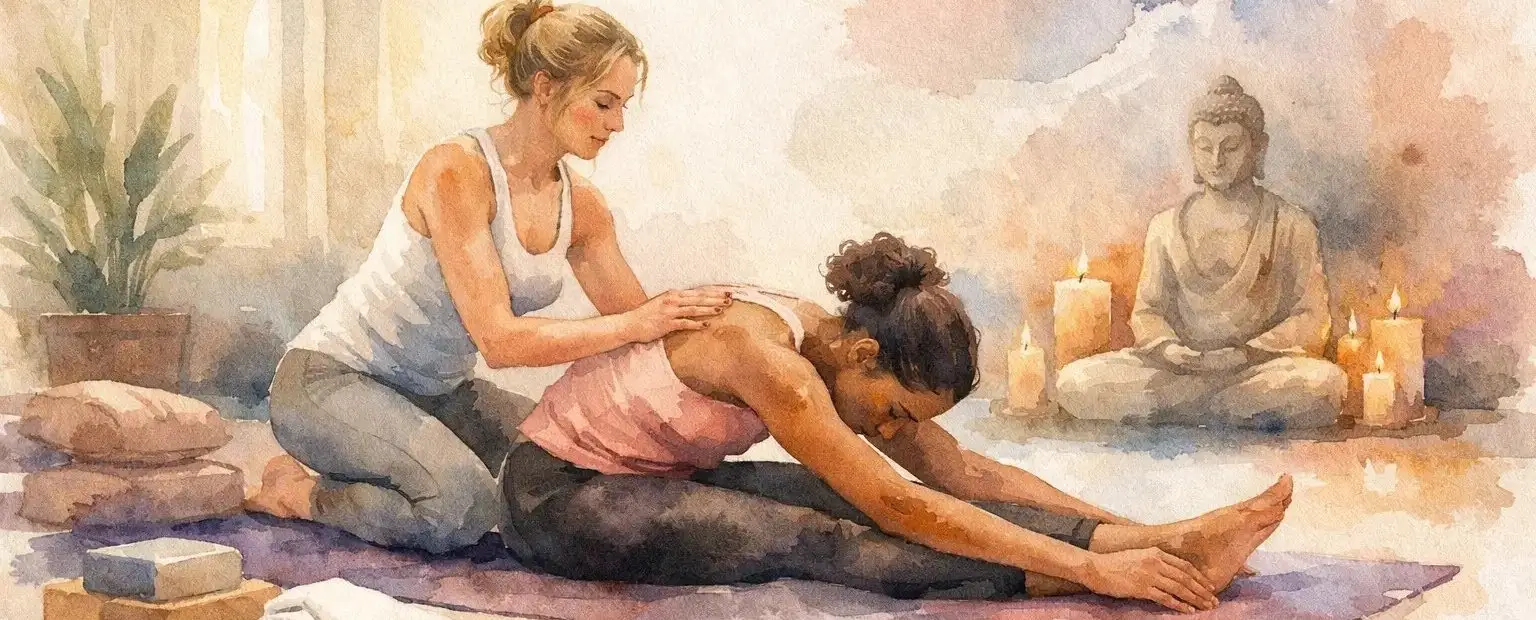
When your body feels overstretched and your mind never quite powers down, a packed yoga class can feel like one more thing to keep up with. That is where the benefits of private yoga become so meaningful. Instead of trying to match the pace, mood, or ability level of a room full of people, you get space to breathe, move, and reconnect in a way that actually meets you where you are.
For many people, yoga sounds helpful in theory but feels intimidating in practice. Maybe you are managing burnout, recovering from stress, carrying old injuries, or simply feeling disconnected from your body. Private yoga offers a gentler entry point. It creates a more supportive experience, one that can feel less like a performance and more like coming home to yourself.
Why the benefits of private yoga feel different
Group classes can be wonderful, but they are built for the group. A teacher has to hold the energy of the room, follow a broad plan, and keep everyone moving together. That structure works well for some people, especially those who enjoy community and a steady flow.
Private yoga shifts the focus entirely. The session is shaped around your body, your energy, your needs, and your capacity that day. If your shoulders are tight from work, your lower back is flaring up, or your nervous system feels frayed, the practice can respond in real time. That level of personalization is one of the clearest benefits of private yoga, especially for people who need care that feels adaptable rather than prescriptive.
This does not mean private sessions are always better than group classes. It depends on what you need. Some people thrive in community. Others need quiet, privacy, and one-on-one support before they feel ready to be in a public class. Sometimes private yoga is a long-term fit. Sometimes it is a bridge that helps you build confidence and body awareness first.
A practice shaped around your nervous system
One of the most overlooked reasons people seek private yoga is nervous system support. If you are carrying chronic stress, even a well-loved class can feel overstimulating. Fast transitions, crowded rooms, loud music, or the simple pressure of keeping up can leave you feeling more activated than restored.
In a private session, pacing can slow down. Breath can take center stage. Rest is not treated like an afterthought. You may spend more time on grounding postures, longer exhales, simple mobility, or guided pauses that help your system shift out of survival mode.
For people living with burnout, anxiety, emotional fatigue, or stress-related tension, this matters. The body often needs safety before it can soften. Private yoga can offer that sense of safety more easily because the environment is more contained, and the teacher can adjust as your energy changes.
Better alignment, less guessing
In a public class, it is easy to wonder whether you are doing a pose correctly while trying not to fall behind. Even experienced students can slip into compensation patterns without realizing it. You might force flexibility where you need stability, or push through discomfort because everyone else seems fine.
Private yoga gives you immediate feedback. A teacher can notice how you stand, where you grip, how you breathe, and which movements create ease or strain. Those small adjustments often make a big difference. A pose that once felt awkward can suddenly feel supportive.
This is one of the practical benefits of private yoga that often carries into daily life. When you move with better alignment, you may notice less unnecessary tension in your neck, jaw, hips, or lower back. You also begin to understand your own body more clearly, which can help you move through the rest of your day with more awareness and less effort.
Support for injuries, limitations, or chronic pain
Not every body walks into yoga ready for a standard sequence. Some people are healing from an injury. Others are working with hypermobility, chronic pain, fatigue, prenatal changes, or mobility limitations. In those cases, a general class may not offer enough nuance.
Private yoga can be modified with much more care. That might mean using props, changing transitions, shortening holds, or focusing on restorative postures instead of more demanding ones. It can also mean knowing when not to push.
That last part is important. Healing is not always about doing more. Sometimes it is about learning what helps your body trust movement again. A private setting makes space for that slower, more respectful process.
More confidence, especially if yoga feels intimidating
A lot of people avoid yoga not because they dislike it, but because they do not want to feel watched, confused, or out of place. If you are new to yoga, returning after a long break, living in a larger body, or carrying self-consciousness around movement, group spaces can feel vulnerable.
Private yoga lowers that barrier. You do not need to know the names of poses. You do not need special flexibility. You do not need to perform calmness or look a certain way. You just need to arrive as you are.
That can be deeply relieving. When the pressure drops, learning becomes easier. Many people find that private sessions help them build enough comfort and familiarity to eventually enjoy group classes, while others realize they simply prefer a more personal and spacious experience. Either is valid.
A deeper connection between breath, body, and emotion
Yoga is often reduced to stretching, but for many people, the deeper value is reconnection. Stress can pull us out of ourselves. We stop noticing our breath. We brace without realizing it. We move through the day disconnected from what we feel.
Private yoga can help restore that connection gently. Because there is more space to pause and check in, emotions and sensations that usually stay buried may become easier to notice. That does not mean every session turns intense or therapeutic. It means the practice can become more honest.
For someone who has been living on autopilot, that honesty can be healing. You start to recognize what your body has been asking for all along – more rest, steadier breath, softer effort, clearer boundaries, more support. In that way, private yoga is not just exercise. It can become a quiet conversation with yourself.
Consistency that fits real life
One reason wellness routines fall apart is that they ask too much from an already full life. Commuting to a class, matching a studio schedule, and trying to choose the right level can create friction. When you are already overwhelmed, even helpful things can feel hard to maintain.
Private yoga tends to work better when it fits the reality of your energy and schedule. Sessions can also evolve over time. Some weeks, you may want active movement. Other weeks, you may need restorative support and breathwork. That flexibility can make it easier to stay consistent, and consistency is often where real change happens.
In a place like Bushwick, Brooklyn, where life can move fast, and overstimulation is easy to come by, having a dedicated space to slow down can feel less like a luxury and more like an anchor.
The emotional benefits of private yoga
Some of the strongest benefits of private yoga are hard to measure, but easy to feel. There is relief in not having to keep up. There is comfort in being seen without judgment. There is softness in practicing with someone who listens to both your words and your body language.
That kind of attunement can support more than flexibility or strength. It can help rebuild trust with your body. It can remind you that care does not have to be harsh to be effective. And it can offer a small but meaningful experience of regulation – the feeling that you are safe enough to exhale fully.
For people who spend much of their lives tending to work, family, or the needs of others, that experience can be profound. It is not only about what you do on the mat. It is about what shifts afterward. You may leave feeling clearer, steadier, and more present in your own life.
Is private yoga worth it?
The answer depends on your goals, your budget, and what kind of support helps you feel most at ease. Private yoga usually costs more than a group class, so it is worth being honest about what you are looking for. If your main goal is simply to move more and you enjoy the energy of a shared room, a class may be enough.
But if you want personalized guidance, trauma-informed support, careful pacing, or a practice that addresses stress in a more intentional way, private yoga can offer real value. It can save you from the cycle of pushing too hard, feeling discouraged, and walking away from practices that might otherwise help.
At its best, private yoga becomes more than instruction. It becomes a place to breathe again, to listen inward, and to let healing happen at a human pace. If you have been craving a wellness practice that feels supportive instead of demanding, this may be the kind of care that helps you meet yourself with a little more kindness.
Disclaimer: This article is for informational purposes only and does not constitute medical advice. Please consult a qualified healthcare professional regarding any medical concerns. The wellness services offered at Lucent Healing are intended to support overall well-being and complement conventional healthcare.