
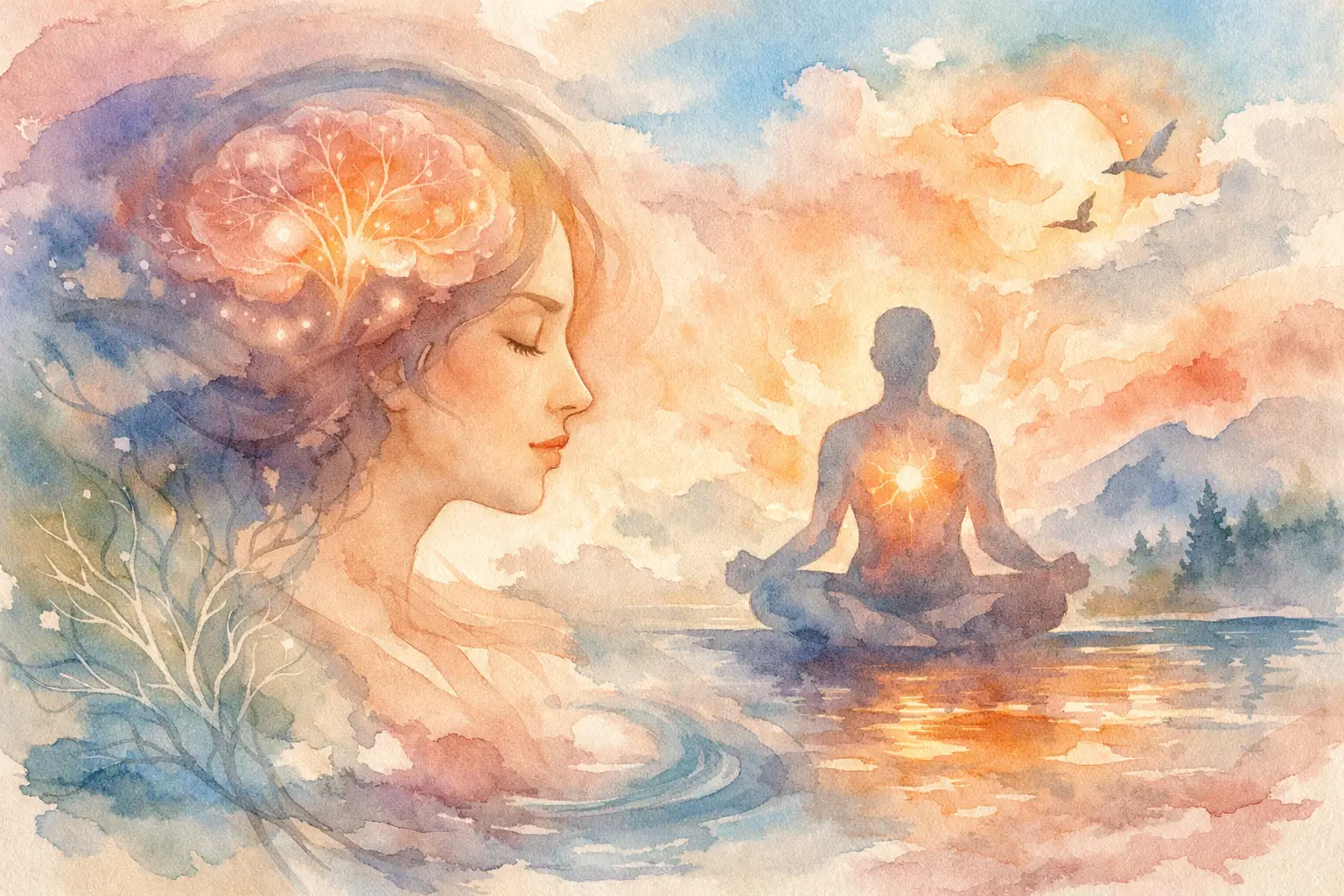
Some days, stress does not feel mental at all. It feels like a tight chest before breakfast, a racing mind when the room is finally quiet, or the kind of exhaustion that sleep does not seem to touch. When people ask, how do you regulate the nervous system, they are often really asking: how do I feel safe in my body again?
That question deserves a gentle answer.
Your nervous system is always reading your environment, your relationships, your workload, your memories, and your physical state. It is not just reacting to what is happening right now. It is also responding to what feels familiar, overwhelming, unresolved, or uncertain. When you have been under pressure for a long time, your body can start to treat stress as normal. You may feel wired, foggy, irritable, numb, restless, or disconnected from yourself.
Regulation is not about forcing yourself to calm down. It is about giving your body enough support, consistency, and safety cues that it can soften on its own.
How do you regulate the nervous system in real life?
The simplest answer is this: slowly, consistently, and with less force than most people think.
Many people try to regulate their nervous system by pushing harder. They add more rules, more discipline, more pressure to meditate correctly, breathe correctly, sleep perfectly, and heal quickly. That usually creates even more strain. A regulated state is not something you earn through perfection. It is something you practice returning to.
That return often begins with small, repeatable experiences. A longer exhale. A hand over your heart. A walk without your phone. A nourishing meal eaten while sitting down. Time with a person who helps your body unclench. Rest that is truly restful, not just collapsing from depletion.
What works best also depends on what state your system is in. If you feel anxious, overstimulated, and on edge, grounding practices can help. If you feel shut down, heavy, or emotionally flat, you may need gentle activation before stillness feels possible. The goal is not to feel zen every hour of the day. The goal is to build more flexibility, so your body can move through stress and come back to center more easily.
Start with the body, not just the mind
When stress has built up over time, insight alone is often not enough. You may know you are safe, but your body may still be bracing. That is why nervous system regulation often begins with physical signals of safety.
Breath is one of the most accessible places to start. Not because every breathing exercise works for every person, but because breath is one of the few ways you can gently influence your internal state in real time. For many people, a slow exhale is more settling than a dramatic deep breath. Try inhaling comfortably, then exhaling a little longer than you inhale. If breathwork ever makes you feel more anxious, that matters. Regulation should feel supportive, not forced.
Touch can also be powerful. A weighted blanket, self-massage, gentle stretching, or supportive bodywork can help the body register containment and relief. This is one reason hands-on care can feel so restorative. It offers an experience many stressed bodies have been missing – the chance to stop guarding for a moment.
Movement helps too, especially when it is intuitive rather than punishing. A slow yoga flow, shaking out your arms, walking outdoors, or simply rolling your shoulders can interrupt the stress loop. For some people, stillness is regulating. For others, stillness feels impossible until the body has a chance to discharge tension first.
The rhythms that help your system feel safe
Your nervous system responds to patterns. It likes predictability more than intensity.
If your days are packed, irregular, and overstimulating, your body may stay in a constant state of anticipation. That does not mean you need a perfect routine. It means simple rhythms can be healing. Waking and sleeping at roughly the same times, eating regularly, stepping outside in the morning light, and creating even brief pauses between tasks can all help your body stop feeling like it is being chased.
This is where many people overlook the basics because they seem too ordinary. But hydration, blood sugar balance, sleep support, and reduced sensory overload are not small things when your system is depleted. If you skip meals, over-caffeinate, scroll late into the night, and move from one demand to the next without pause, your body may read that as ongoing threat. Gentle structure can become a form of care.
Emotional rhythms matter too. If you rarely have space to feel what you feel, your nervous system may hold that unfinished energy in the background. Journaling, quiet reflection, therapy, prayer, or simply naming your emotional state can help create a little more internal room. Sometimes, regulation begins with honesty: I am not just tired. I am overwhelmed. I am grieving. I have been carrying too much for too long.
How holistic practices support nervous system regulation
If you have been trying to think your way out of burnout, holistic support can offer another path. Many nervous systems need more than advice. They need an experience of being met.
Practices like massage therapy, acupuncture, Reiki, sound healing, hypnotherapy, breathwork, and private yoga can support regulation by helping the body shift out of chronic guarding and into a state of deeper ease. Each modality works differently, and no single approach is right for everyone.
Massage can help when stress is living in the muscles and fascia, especially if you have been clenching without realizing it. Acupuncture may support people who feel scattered, depleted, or stuck in chronic tension patterns. Reiki and sound healing can be especially comforting for those who feel emotionally overloaded or spiritually disconnected and want a quieter, more inward experience. Breathwork and yoga can help rebuild the bridge between body awareness and emotional steadiness.
The deeper value of this kind of care is not only symptom relief. It is the feeling of coming home to yourself. In a supportive setting, your body gets to practice receiving instead of bracing. That matters more than many people realize.
At Lucent Healing, this whole-person approach is part of what makes regulation feel more accessible. Rather than treating stress as one isolated issue, it honors the way mind, body, and spirit affect each other.
When regulation does not look calm
One of the most compassionate things to understand is that regulation does not always look peaceful right away.
Sometimes, when your body finally slows down, you feel sadness you have been outrunning. Sometimes rest brings up discomfort because you are no longer distracted from what is underneath. Sometimes a healing practice that helps one day may feel like too much on another day. That does not mean you are doing it wrong.
There is no single nervous system reset that works for every person, every season, or every stress load. A parent running on little sleep may need different support than someone recovering from a difficult breakup. A person with trauma history may need slower, more choice-centered practices than someone simply dealing with work overload. This is why individualized care matters.
If you feel chronically panicked, numb, unable to rest, or overwhelmed by sensations in your body, professional support can be deeply helpful. Holistic care can be a meaningful part of that support, and for some people, therapy or medical care should also be part of the picture. It does not have to be one or the other.
A gentler way to begin
If all of this feels familiar, you do not need to fix everything this week. Begin by asking a softer question. Not, how do I make myself calm down immediately? Try, what helps my body feel a little more supported right now?
That might be three quiet breaths with a long exhale. It might be stepping outside for five minutes, turning down the noise, drinking water, lying on the floor, or booking a session that lets you be held in a space designed for restoration. Small moments count. Repeated often, they teach your system that ease is possible.
Healing rarely arrives as one dramatic shift. More often, it shows up as a little more space in your chest, a little less urgency in your thoughts, and the unfamiliar but welcome feeling that you can breathe again.
Your nervous system is not asking you to become someone else. It is asking for care, rhythm, and enough safety to soften. Start there, and let that be enough for today.
Disclaimer: This article is for informational purposes only and does not constitute medical advice. Please consult a qualified healthcare professional regarding any medical concerns. The wellness services offered at Lucent Healing are intended to support overall well-being and complement conventional healthcare.