
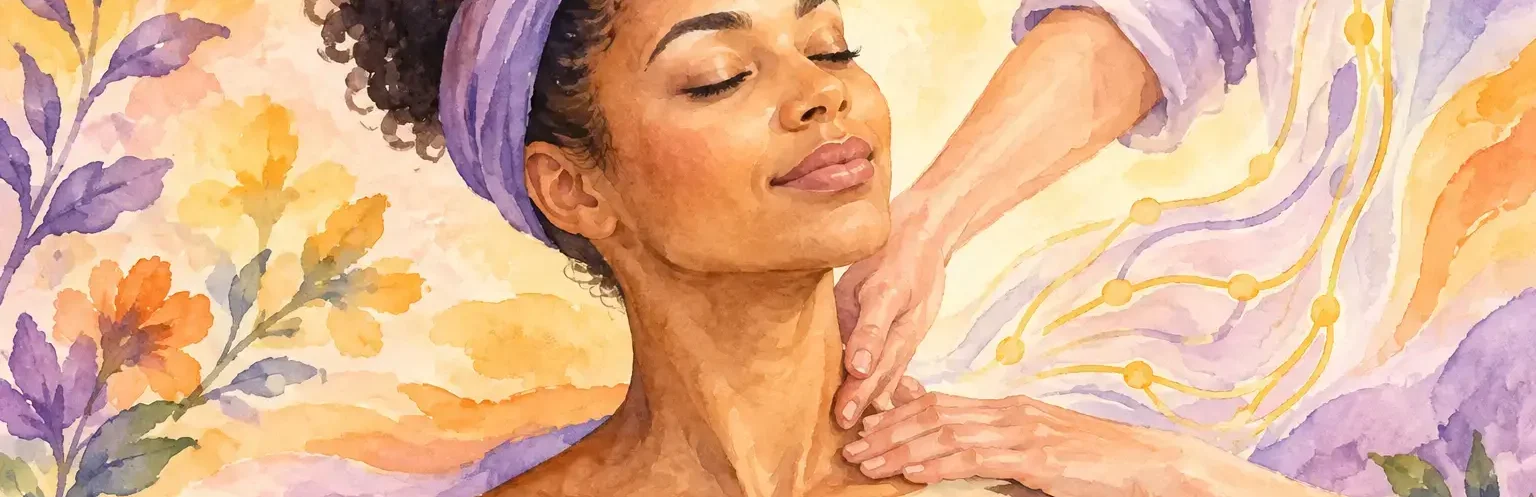
Some forms of care ask your body to work harder. Lymphatic massage offers something different: a quiet invitation to soften. This lymphatic massage guide is for anyone who feels puffy, sluggish, overstimulated, or simply far away from themselves after long weeks of stress. It is not about forcing a release or chasing a dramatic transformation. At its best, it is gentle, attentive support that gives your system room to settle.
The lymphatic system is part of the body’s natural fluid-management and immune-support network. It helps move lymph – a clear fluid containing waste products, proteins, and immune cells – through vessels and lymph nodes. Unlike the circulatory system, which has the heart to keep blood moving, the lymphatic system relies largely on movement, breathing, and the natural rhythm of the body.
That is one reason slow touch can feel so meaningful. When life has become all deadlines, screens, shallow breaths, and clenched shoulders, receiving care can be a way to come home to yourself.
What lymphatic massage is, and what it is not
Lymphatic massage, often called manual lymphatic drainage, uses very light, rhythmic strokes intended to support the movement of fluid toward areas of the body where lymph is filtered. The pressure is usually much lighter than a traditional Swedish or Deep Tissue massage. Rather than working deeply into muscle knots, the practitioner works close to the surface of the skin with calm, precise movements.
This can surprise people who associate an effective massage with strong pressure. With lymphatic work, more pressure is not necessarily better. Lymphatic vessels sit close to the skin, and the experience is designed to be soothing rather than intense. Many people describe it as deeply restful, even if they arrive unsure whether such a gentle session can make a difference.
It is also worth separating wellness language from medical promises. A lymphatic massage does not “flush toxins” in the sweeping way that phrase is often used online. Your liver, kidneys, lungs, skin, and digestive system already do essential work to process and eliminate waste. Gentle lymphatic techniques may support fluid movement and relaxation, but they are not a cure for illness, a substitute for medical treatment, or a guaranteed remedy for swelling.
Why it can feel supportive during stressful seasons
Stress is not held in only one place. It can show up as a tight jaw, interrupted sleep, shallow breathing, digestive discomfort, a sense of heaviness, or the feeling that you have been carrying too much for too long. While lymphatic massage is not a treatment for anxiety or burnout, its slower pace can offer a valuable counterpoint to the urgency many people live with.
The setting matters as much as the technique. A trauma-informed session begins with consent, clear communication, and the understanding that your body is yours. You can ask for more draping, less conversation, adjusted pressure, a different position, or a pause at any time. Supportive care should never require you to push past your own signals.
For some people, the benefit is practical: they may feel less temporarily puffy after travel, prolonged sitting, or a period of low movement. For others, it is the experience of being cared for without needing to perform wellness perfectly. Both responses are valid. Bodies are individual, and a session can be restorative without needing to be dramatic.
A lymphatic massage guide to what a session feels like
Before your appointment, your practitioner should ask about your health history, current concerns, medications, surgeries, and goals. This is not paperwork for its own sake. Lymphatic techniques are not appropriate in every situation, so honest information helps create a session that respects your needs.
During the massage, you will typically rest on a massage table, comfortably draped. The practitioner may begin near the neck and collarbones, where major lymphatic pathways are located, then use soft, repeated strokes in areas such as the face, arms, abdomen, or legs. The exact approach depends on your goals, comfort, and training scope.
The sensation is often featherlight, gently stretching the skin rather than pressing into the muscles. You may notice warmth, a settling in your breath, gurgling in the abdomen, or a strong urge to rest. You may also notice very little during the session and still leave feeling calmer. There is no correct response to have.
Afterward, some people feel peaceful, sleepy, or more aware of thirst. Others feel no major change. A simple plan is usually enough: drink water when you are thirsty, eat a nourishing meal, take an easy walk if it feels good, and give yourself a little space before rushing into the next demand. You do not need a punishing cleanse, restrictive diet, or intense workout to “make the massage work.”
When to choose lymphatic work over deeper massage
The right bodywork is less about what is trending and more about what your body needs today. If you are craving muscle-focused work for persistent tightness in your back, hips, or shoulders, Swedish massage, therapeutic massage, or targeted bodywork may be a better fit. If your system feels tender, overloaded, or in need of quiet support, lymphatic work may feel more aligned.
It can also complement other gentle practices. Breathwork can encourage fuller breathing and embodied awareness. Restorative yoga offers movement without strain. Acupuncture, Reiki, sound healing, or calming massage may support your sense of grounding in different ways. None of these modalities needs to carry the full weight of your healing. A thoughtful path is often built gradually, with room to notice what helps.
At Lucent Healing, care is meant to feel less like another task to complete and more like a sanctuary where you can pause, listen, and begin again. Your practitioner can help you consider which approach feels most supportive without assuming there is one right answer for every body.
Who should check with a medical professional first
Lymphatic massage can be gentle, but gentle does not mean universally appropriate. If you have new, unexplained, painful, or one-sided swelling, seek medical assessment rather than booking a massage first. Sudden swelling, redness, warmth, shortness of breath, chest pain, fever, or a rapid change in how you feel deserves prompt medical attention.
You should also speak with a qualified healthcare professional before receiving lymphatic work if you have an active infection, blood clot or history of clotting concerns, congestive heart failure, kidney disease, certain cancers, or a condition affecting your lymphatic system. Recent surgery and post-operative care require especially specific guidance. In those cases, a practitioner trained in post-surgical or medically indicated manual lymphatic drainage should work in coordination with your medical team.
Pregnancy, chronic health conditions, and medications do not automatically mean you cannot receive massage. They do mean the conversation should be individualized. A skilled practitioner will welcome questions, stay within their scope, and refer out when that is the most caring choice.
Gentle ways to support lymph flow between sessions
Your body does not need a complicated protocol to receive support. Regular, comfortable movement, adequate rest, and breathing that reaches beyond the upper chest can all support general well-being. A short walk, a few minutes of stretching, or standing up between work calls may be more sustainable than an ambitious routine that adds pressure to an already full day.
If you are curious about self-massage, keep the touch light and avoid trying to treat swelling or diagnose yourself. A trained practitioner can show you an approach appropriate for your body and health history. In the meantime, let comfort be your guide. Sharp pain, increasing swelling, dizziness, or discomfort are signs to stop and seek appropriate advice.
Healing does not always arrive as a breakthrough. Sometimes it begins as ten quiet minutes, a fuller breath, or the moment you realize your shoulders have dropped. Let that be enough. Your body is not a problem to solve – it is a place to meet with patience, care, and the permission to breathe again.
Disclaimer: This article is for informational purposes only and does not constitute medical advice. Please consult a qualified healthcare professional regarding any medical concerns. The wellness services offered at Lucent Healing are intended to support overall well-being and complement conventional healthcare.